Cruising from Durban: What the Summer Season Looks Like and When to Book
- Home
- Travel 101
- Cruising from Durban: What the Summer Season Looks Like and When to Book

Overview - Cruises from Durban and when to book
Cruises from Durban run only between late November and early April. The 2026/27 South Africa cruise season has 27 departures from Durban and none at all between May and October. Almost all are two- to five-night round trips to Mozambique, with a three-night to Portuguese Island and a four-night to Pomene making up 21 of the 25 short sailings. Both beach stops are tender calls with no pier, so either can be cancelled for weather, and the balance of the fare falls due 75 days before departure.
- The 2026/27 South Africa cruise season runs 27 November 2026 to 1 April 2027 - Twenty-seven cruises from Durban across roughly four months, and then nothing until the following November.
- Two itineraries make up most of it - A three-night to Portuguese Island and a four-night to Pomene account for 21 of the 25 short round trips.
- Both beach stops are tender calls - Neither has a pier, and both can be cancelled for weather. This is the thing to understand before you book.
- Balance is due 75 days before you sail - Not on the day you travel. That is the real answer to when to book a cruise here.
- Several sailings are closed charters - Not sold to the public. Check before you fall in love with a date.
- Parking is limited and there is no shuttle - The Durban cruise terminal has 254 bays. Worth knowing before you drive down from Gauteng.
- Passports, not ID books - A passport valid six months beyond your return is required for every sailing that touches Mozambique — which is all but one.
There is no such thing as a cruise from Durban in July. Not a quiet one, not an expensive one, not one you have to look hard for — there is simply no ship. The season opens in late November, closes at the start of April, and for the seven months in between the port has no cruise departures at all.
That single fact explains almost everything else about how this works. It is why the booking pattern is unlike anywhere else, why the itineraries are two to five nights rather than a week, and why "we'll go next month" is often not an option that exists. Understanding the shape of the South Africa cruise season before you start looking at dates will save you the most common disappointment in this market, which is discovering that the trip you have in mind does not run.
The South Africa cruise season, and why it is only four months long
The season is short for a reason that has nothing to do with Durban. The ship that operates it spends the northern summer in the Mediterranean and is physically moved to South Africa for the southern one.
For 2026/27 that repositioning is a 26-night voyage leaving Marghera, near Venice, on 1 November 2026, routed through Italy, Greece, Jordan and Egypt, down the Suez Canal, then Seychelles, Madagascar, Mauritius, Réunion and Mozambique before arriving in Durban. The return leg leaves Durban on 1 April 2027 and takes a similar route home. One industry report notes the northbound voyage is subject to Red Sea security conditions, which is worth knowing if you were considering the repositioning cruise itself rather than a short break.
So the window is set by a deployment decision as much as by weather, which is the most useful single thing to understand about the South Africa cruise season. The first of the 2026/27 cruises from Durban departs 27 November 2026. The last round trip from Durban leaves 5 March 2027. After that the ship repositions to Cape Town for a short March programme and sails home.
There is no shoulder season and no off-season sailing. Port schedules show no cruises from Durban at all between April and November 2027. If your dates are in May, June, July, August, September or October, the answer is not "look harder" — it is that the product does not exist in those months. The one exception is the occasional luxury ship passing through on a world voyage, and those are calls, not departures. They dock at the Durban cruise terminal and sail on; you cannot board them locally.
What actually sails from Durban in 2026/27
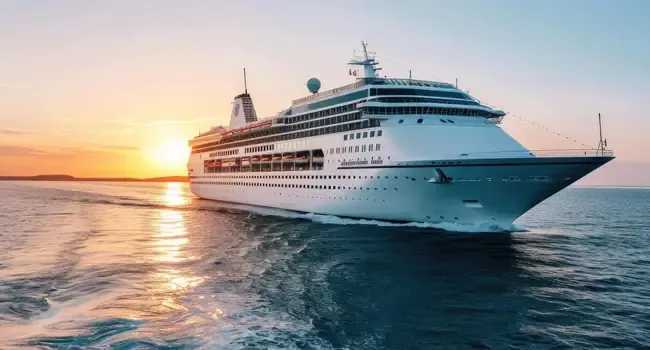
One ship is home-ported here for the season: MSC Armonia, making her South African debut. She replaces MSC Opera, which ran the 2025/26 MSC Cruises Durban programme. This is not an editorial preference — it is simply what the deployment data shows. No other line turns a ship around at the Durban cruise terminal this season, so for practical purposes the MSC Cruises Durban schedule and the season are the same thing.
She is a mid-size ship rather than one of the new giants, and it is worth setting expectations honestly. Built in 2001 at Saint-Nazaire in France as European Vision, she was acquired by MSC in 2004 and then physically cut in half at Fincantieri's Palermo yard in 2014, with a new mid-section inserted. That rebuild added 193 guest cabins and took her from 251 metres to 275. She was refurbished again in 2019 and drydocked in 2024.
| MSC Armonia | Detail |
|---|---|
| Built | 2001, Chantiers de l'Atlantique, Saint-Nazaire; lengthened 2014 |
| Size | 65,542 GT, 274.9 m long, 13 decks (nine guest-accessible) |
| Cabins | 976, including five accessible |
| Guests | Around 2,000 at double occupancy, up to roughly 2,600 when every berth is filled |
| Crew | 721 |
The MSC Cruises Durban deployment gives her four months here and nothing else. On board there are two saltwater pools, an open-air Spray Park water feature, a 550-seat theatre, a casino, a spa of around 830 m² with a Technogym-equipped gym, mini-golf, a golf simulator, and Baby, Mini and Teens clubs. What there is not: racing waterslides, ropes courses, go-karts or zip lines. If you have been reading Caribbean cruise content, adjust accordingly. That is a description, not a criticism — a 2001-built ship comprehensively rebuilt in 2014 is a different product from a 2024 mega-ship, and it is the product this route runs.
Two details that catch first-timers out. Dinner runs on two fixed sittings, roughly 18:00 and 20:15, with the buffet as the flexible alternative — the anytime dining you may have read about elsewhere is not standard here. And on South African departures, gratuities are included in the fare, though bar purchases carry an automatic 15% service charge. Onboard accounts are settled in US dollars or euros, converted at the rate on the day you board. The MSC Cruises Durban programme runs to 32 sailings across the season, 27 of them leaving Durban, and the ship is the same one on all of them.
The itineraries, and the one number that matters
Twenty-five of the cruises from Durban are short round trips, and their shape is remarkably consistent:
| Itinerary | Nights | Sailings | Sea days |
|---|---|---|---|
| Durban – Portuguese Island – Durban | 3 | 11 | 1 |
| Durban – Pomene – Durban | 4 | 10 | 2 |
| Durban – Pomene – Portuguese Island – Durban | 5 | 2 | ~2 |
| Durban – Maputo – Portuguese Island – Durban | 4 | 1 | ~1 |
| Durban – nowhere – Durban | 2 | 1 | 2 |
The two headline itineraries are 84% of the short-break programme. Everything else is a one-off.
Three things fall out of that table, and the third is the one people wish they had known.
- There is no seven-night cruise from Durban - Not in 2026/27. If you have seen one advertised, check the ship and the season — it is not this deployment.
- Maputo is not a staple - It appears exactly once, on the sailing departing 8 February 2027. Plenty of writing about cruises from Durban lists Portuguese Island, Pomene and Maputo as though they are equally likely. For this season, Maputo is a single date.
- One day in three, or two days in four, are spent at sea - This is the one people wish they had known. On the three-night you get one beach day; on the four-night you get one beach day and two sea days.
A published day-by-day for a January sailing shows the ship leaving Durban at 16:00, reaching Portuguese Island at 09:00 the next morning, leaving at 20:00, spending the following day at sea and docking back in Durban at 06:00. The outbound run takes about 17 hours; the return leg covers the same distance in nearly twice that, because the sea day is a scheduled leisure day rather than a navigational necessity.
This is the single biggest difference between cruises from Durban and the Mediterranean itineraries most first-timers have in their heads. A week in the Med might call at five cities. A three-night from Durban calls once, at an uninhabited sandbank. There is no old town, no cathedral, no museum. The proportion of the trip spent on board is far higher, which means the ship itself is the destination in a way it is not in Europe. Book cruises from Durban expecting that and they work. Book them expecting sightseeing and they will not.
One outlier worth knowing about: the sailing departing 26 December 2026 is a 12-night voyage to Port Louis in Mauritius and La Possession on Réunion, calling at Portuguese Island on the way home. It is the only long-haul itinerary of the season. Note that infants under two are not permitted on cruises of 11 nights or more, which rules this one out for families with a baby.
Portuguese Island, honestly
This is the stop on eleven of the season's cruises from Durban, so it is worth knowing exactly what it is. Portuguese Island — Ilha dos Portugueses — sits at the outer limit of Maputo Bay, about 1,850 metres from Inhaca Island. It is uninhabited. The only structure on it is the ruin of a former leprosarium.
It is not a private island. This matters because the model most people know from Caribbean cruising is the line-owned private island, and this is not that. Portuguese Island is a Mozambican state reserve. Both it and Inhaca have held protected status since 1965, administered by the marine biology station of Eduardo Mondlane University. Despite what several articles claim, it is not part of Maputo National Park — the UNESCO nomination for that park expressly excludes Inhaca, Portuguese Island and the Machangulo Peninsula.
It was once called Ilha dos Elefantes, Elephant Island, and served as a European ivory trading post from the sixteenth century until the docks at Lourenço Marques were built in the late nineteenth. It is an unstable sand island that reportedly changes shape with each cyclone, with a small lagoon and coral formation on its northern side.
What is actually there, per the cruise line's own description: beach umbrellas, deckchairs and sunbeds, beach volleyball and beach tennis equipment, kiosks serving drinks and local food including Tipo Tinto rum, dhow trips around the island, and an optional excursion across to Inhaca, which does have beaches, restaurants, a market, a marine museum and an old lighthouse. The line describes the island as six kilometres long and about an hour's walk on sand, and advises walking a short way from the tender landing point rather than settling at the first stretch of beach you reach.
What is not documented anywhere I could verify: toilet facilities, shade provision, changing rooms, or how long you actually get ashore. Travellers who have been report crowding when a full ship lands at once, and queues for the tenders. Plan for a beach day with limited infrastructure, not a resort. That is not a complaint about it — an uninhabited reserve is a genuinely unusual thing to be able to reach on a long weekend — but it is what the three-night cruises from Durban actually deliver.
Pomene, honestly
Pomene is a genuinely different proposition, and if you are choosing between the three-night and the four-night cruises from Durban this is the deciding factor.
It sits in Inhambane province, roughly 600 to 650 kilometres north of Maputo — a peninsula sheltering a lagoon and estuary, backed by mangrove forest and vegetated dunes. The whole area is the Pomene National Reserve, established in 1964 and covering around 50 km². Mozambique's national conservation authority lists wildebeest, klipspringer, steenbok, impala, baboon, bushpig and duiker among its mammals, and flamingos and pelicans among the birds. A lighthouse stands at the reserve's high point, 110 metres up.
The landmark most people photograph is the ruin of the Hotel de Pomene, built in the early 1960s and abandoned — a shell of colonial-era architecture on the dunes. Shore activities offered include beach walks, horseback riding on the sand, guided nature walks, diving and snorkelling.
So: Portuguese Island is a bare sandbank with umbrellas and a kiosk. Pomene is a mainland nature reserve with mangroves, an estuary, wildlife, a lighthouse and a ruined hotel. Neither has a town. That is the honest difference between the two itineraries, and it is a bigger difference than one extra night suggests.
One useful note from the Mozambican authority itself: it lists November to March as the best window for beach visits to Pomene — which is, conveniently, almost exactly the South Africa cruise season.
The tender problem, and cyclone season
This section is the one to read twice.
Neither Portuguese Island nor Pomene has a pier. On both, the ship anchors offshore and passengers go ashore by tender boat. The cruise line flags both as potentially unsuitable for guests with disabilities, reduced mobility or balance issues. And a South African cruise specialist notes that beach access at Portuguese Island is weather and sea conditions permitting.
The practical consequence is that these calls can be cancelled outright. A Mediterranean itinerary of alongside berths cannot be missed the same way, and it is the structural risk built into every one of the cruises from Durban.
What this looks like in practice
In February 2026, a South African newspaper travel writer sailed a four-night out of Durban. The captain cancelled the Pomene call because forecast rough seas and strong winds would have made the anchoring manoeuvre and tender operations unsafe. Pomene was the only scheduled port on that itinerary, so the ship simply returned to Durban. The passengers had a four-night cruise that called nowhere. This is a documented outcome, not a hypothetical.
The reason sits in the calendar. The South-West Indian Ocean tropical cyclone season officially runs 15 November to 30 April. The South Africa cruise season runs 27 November to 1 April. They are, to within a fortnight at each end, the same window.
Some useful nuance rather than alarm. The monsoon typically does not reach the Mozambique Channel until December, so November and early December carry lower cyclone risk than the months that follow. Activity peaks January to March. Between 1948 and 2010, 94 tropical systems developed in the Mozambique Channel and roughly half made landfall. In February 2026, Cyclone Gezani struck eastern Madagascar with winds of 180 km/h before moving into the Channel towards southern Inhambane province — which is where Pomene is.
None of this makes the season unsafe. Ships route around weather and captains cancel calls precisely so that they do not have to test it. But it does mean that if you book a four-night in late January with your heart set on Pomene, you should book it liking the ship as well as the beach, because there is a real chance you will spend the whole trip on board.
If you want to minimise that risk, the late-November and early-December sailings sit before the Channel becomes active. That is the closest thing to a weather-optimised choice this calendar allows, and it is a real consideration in deciding when to book a cruise on this route.
When to book a cruise from Durban: the 75-day rule
Most advice about when to book a cruise is guesswork dressed up as insight. Here there is one hard, published deadline, and it is the thing to plan around.
- Deposit - Due within 72 hours of your booking being confirmed.
- Full payment - Due no later than 75 days before departure.
- Booking inside 75 days - Payment is due in full immediately. There is no deposit option that close in.
- Cancellation charges - Step up at 75 days, and again at 40 days before departure.
Work backwards and the dates become concrete. For the season opener on 27 November 2026, the 75-day mark falls around 13 September 2026. For the 12-night Christmas and New Year voyage departing 26 December, it lands around 12 October 2026. Those are the dates your money is actually needed, and they are what should drive when to book a cruise on this route — not a guess about when cabins run out. Anchor the decision to the 75-day date and the rest of the planning falls into place.
On that point, a note of honesty. There is no published data on when Durban cabins sell out, which sailings go first, or typical booking lead times. Anyone who tells you "the Christmas sailings are gone by August" is asserting something no source supports. What is documented is that the market is growing, that Gauteng is the primary source market for cruises from Durban, and that South African sailings have sold out before — a Royal Caribbean voyage touching Cape Town in November 2025 sold out entirely.
The school holidays do the rest of the work
If sell-out data does not exist, the school calendar is the next best predictor of when to book a cruise, because it tells you when everyone else wants to travel.
One correction first, because a great deal of published advice still gets this wrong: South Africa now runs a single national school calendar. The old inland and coastal split no longer applies. KwaZulu-Natal and Gauteng term dates are identical.
For 2026, the fourth term ends for learners on 9 December. For 2027, the first term starts on 13 January. Map that onto the sailing list and the picture is immediate:
- Inside the December holidays - The sailings departing 11, 14, 18, 21 and 26 December 2026. The 21 December five-night spans Christmas; the 26 December twelve-night spans New Year.
- The last two that fit before schools reopen - 7 and 11 January 2027.
- Everything from mid-January to early March - Falls in term time — which is where the pressure comes off.
- Easter 2027 - Falls on Good Friday 26 March, with Family Day on 29 March. Both of the season's final sailings land on it, and both leave from Cape Town rather than Durban.
Note also that 16 December 2026, the Day of Reconciliation, falls mid-week between the 14 and 18 December departures. And in 2027, Human Rights Day on 21 March falls on a Sunday, moving the public holiday to Monday 22 March.
If your dates are flexible and you would rather not sail with every family in the country, the mid-January to early-March window is the obvious answer to when to book a cruise. If you need the school holidays, treat the 75-day payment date as your real deadline and work back from there.
The trap nobody mentions: closed charters
Nine of the 32 sailings in 2026/27 are themed — and this is a much bigger feature of the South Africa cruise season than of the Mediterranean or Caribbean ones. Music festivals, radio-station charters, Afrikaans-language line-ups, a Bollywood and bhangra sailing reflecting Durban's Indian-South African community, an arts festival at sea in its thirteenth edition, a women-focused wellness sailing, and an 18-plus DJ cruise.
Several of these are marked as closed charters, not sold to the general public. The line's own itinerary document flags them. I am deliberately not publishing a list of which ones, because the marking could not be extracted reliably enough to be certain — and telling you the wrong date would be worse than telling you to check.
So: check what theme is running on your dates before you commit. It belongs in the same decision as when to book a cruise, not after it. A quiet family long weekend and an 18-plus DJ cruise are the same ship on different weekends. The season list of MSC cruises from Durban shows the theme attached to each departure date, which is the quickest way to rule a weekend in or out. Where a festival is running, the festival programme generally replaces the standard entertainment programme, and a separate entertainment charge applies on top of the cabin fare, with individual show tickets booked through a third party.
The Durban cruise terminal
The building is the Nelson Mandela Cruise Terminal at N Shed on the Point, and the operating company is KwaZulu Cruise Terminal. Some listings treat those as two different facilities. They are the same place, and it is the only Durban cruise terminal there is.
It is a joint venture between MSC Cruises, the Africa Armada Consortium and Transnet National Ports Authority — which is why the MSC Cruises Durban operation and the terminal are so closely tied. Construction started in 2019, the first ships were handled in 2021 after COVID delays, and it was officially inaugurated by President Ramaphosa in November 2023. The Durban cruise terminal covers around 6,000 m² and is rated for 4,000 passengers a day, on a 400-metre quay.
Facilities are straightforward and adequate: customs and immigration processed on site with live links to government databases, baggage collection, a tourist information desk, wheelchair and pram access, baby-changing, and a PA system throughout. One quirk worth knowing — drones are prohibited in the Durban cruise terminal precinct without approval from both the civil aviation authority and the harbour master.
Parking is the pinch point
The Durban cruise terminal has 254 parking bays and space for six coaches. Rated capacity is 4,000 passengers a day. Those two numbers do not reconcile, and they are not meant to — most passengers are dropped off or arrive by coach.
Parking is first come, first served for the duration of the cruise, you present your embarkation ticket to be scanned on entry, and vehicles are parked at the owner's risk. There is no complimentary shuttle service from the Durban cruise terminal. Note too that the line's own port information places the passenger car park on Marine Terminal Street, which is not the terminal building itself — check your documents for where you are actually meant to leave the car.
The location is one of the genuinely good things about cruises from Durban. uShaka Beach is 800 metres from the Durban cruise terminal and uShaka Marine World is a five-minute walk, which makes an early arrival or a late disembarkation considerably less tedious than it is at most cruise ports.
Getting there, and the timings that matter
Most passengers come from Gauteng. Both routes work, but the numbers are worth having.
- Flying - Johannesburg to King Shaka is about 1 hour 15 minutes in the air over roughly 477 km. From King Shaka to the Durban cruise terminal is around 35 to 40 km on the N2 — officially about 30 minutes, though a recent first-hand account records 45. Budget 45 minutes, not 30.
- Driving - Roughly a six-hour run on the N3, which is tolled. Coming from the north you can approach via the N3 to Junction 1 or the N2 to Junction 151 and the M4; either way you are aiming for Margaret Mncadi Avenue and the Port of Durban signage.
- Check-in opens online 30 days before departure - You are given an assigned embarkation time slot. This is enforced — you will not be let into the Durban cruise terminal before your slot, so arriving early to beat the queue does not work.
- Boarding cut-off - Check-in and boarding close two hours before departure.
- Departure times vary by sailing - The season opener leaves at 14:00; a January sailing leaves at 16:00. Do not assume a standard time — read your ticket.
Documents: stricter than you would expect
This is where a domestic-feeling long weekend stops being domestic, and it is the part of the South Africa cruise season that trips people up at the door.
- Passport validity - An original passport, valid for six months from your date of return, is required for every sailing that calls at a foreign port. That is all of them except the two-night cruise to nowhere on 12 February 2027, which is the only sailing where a South African ID document is accepted.
- South African passport holders need no visa for Mozambique - As SADC nationals. Immigration for the beach calls is processed by the ship.
- Under-18s need an unabridged birth certificate - Showing both parents' full names and ID numbers. This one catches people, because the government no longer requires a birth certificate for South African children travelling on South African passports — but the cruise line's own terms do require it for any cruise calling at a foreign port, and the cruise line's rule is the one enforced at the Durban cruise terminal. Take it.
- A child travelling without both parents - Needs a parental consent affidavit or court order, plus a copy of the absent parent's ID and contact details.
- Travel insurance is mandatory - Not optional, and proof is required to board.
- Carry documents on you - Keep ID and travel documents in hand luggage, never in a checked bag. Checked bags are delivered to cabins late afternoon.
Mozambique has been introducing electronic pre-authorisation for some visa-exempt travellers arriving by air. Whether that extends to cruise arrivals by sea is not clear from any official source, and the ship handles immigration for passengers either way. If it concerns you, confirm with the cruise line before you sail rather than relying on a general travel article.
One reassurance worth stating plainly, because the two get confused: the UK Foreign Office advisories for Mozambique apply to Cabo Delgado and named districts of Nampula and Niassa, in the far north. No advisory applies to Maputo, Maputo province or Inhambane province — which is where every stop on these itineraries is. Those warning zones are well over a thousand kilometres from anywhere a Durban cruise goes.
Durban weather during the season
Hot, humid, and wetter than people expect. These are typical monthly figures.
| Durban average | Nov | Dec | Jan | Feb | Mar | Apr |
|---|---|---|---|---|---|---|
| High | 26.6 | 27.9 | 29.2 | 29.6 | 28.8 | 27.4 |
| Low | 18.2 | 19.8 | 21.0 | 21.3 | 20.2 | 17.5 |
| Rain (mm) | 120 | 125 | 120 | 130 | 115 | 90 |
| Sea temp | 23.6 | 24.8 | 26.1 | 26.6 | 26.5 | 25.6 |
February is the warmest month and has the warmest sea. Humidity sits between 74% and 77% every single month of the South Africa cruise season, which is the thing the temperature column does not tell you — Durban in February is muggy in a way that 29°C elsewhere is not. Rainfall is high from November through March and drops off noticeably in April. Sea temperatures never fall below about 23°C, so swimming is comfortable throughout. Sun protection matters more than anything else you pack.
Durban is not the only way South Africans cruise
Worth saying, because cruises from Durban are narrow by design and it is easy to conclude that this is all there is.
Cape Town is a much broader turnaround port. Over recent seasons it has handled turnarounds and calls from a long list of lines — Cunard, Azamara, Regent Seven Seas, Oceania, Norwegian, Princess, P&O, AIDA, TUI, Costa, Crystal and Hapag-Lloyd among them. The provincial tourism agency recorded 79 ship visits and 127,000 passengers in the 2024/25 season, worth an estimated R1.79 billion to the local economy. Call volumes have come off that peak since, with roughly 50 calls a season projected for the next two.
The Durban cruise terminal is busier as a port of call than as a home port. Ships from Silversea, TUI, Hapag-Lloyd, Cunard, Regent, Costa, P&O, Viking and others are all scheduled through Durban across the 2026/27 season. You generally cannot board those locally — they are passing through on longer voyages — but they are the reason the Durban cruise terminal handled around 255,000 passengers and crew in 2025/26, supporting an estimated 3,401 jobs and R1.88 billion in economic activity across KwaZulu-Natal.
And on a question that comes up constantly: Royal Caribbean does not home-port in South Africa and has no Durban departures for 2026/27. Its ships call occasionally on repositioning voyages — Voyager of the Seas stopped at Cape Town and Gqeberha in November 2025, its first passenger visit to South African waters in over a decade, and that voyage sold out — but you cannot board a Royal Caribbean ship at the Durban cruise terminal.
If the short Mozambique format is not what you are after, the wider range of cruise packages from South Africa covers the Cape Town departures and the fly-to-join options, which is where the seven-night-and-longer itineraries actually live.
So when should you go?
| If you want | Aim for | Because |
|---|---|---|
| The best odds of actually landing at the beach | Late Nov – early Dec | Before the Mozambique Channel becomes cyclone-active |
| A family trip in the school holidays | 11 Dec – 11 Jan | The only sailings that fit; pay 75 days ahead |
| The quietest ship | Mid-Jan – early Mar | Term time, no public holidays, widest choice of dates |
| Warmest weather and sea | February | 29.6°C average high, 26.6°C sea — also peak cyclone months |
| A beach day and a nature reserve | The 5-night sailings | Only two run all season; they call at both |
| Somewhere other than Mozambique | March, from Cape Town | Walvis Bay itineraries; not a Durban departure |
The honest summary is that cruises from Durban are a narrow product done well. Four months, one ship, two main itineraries, one port call each, and a great deal of time at sea. Judged as a week in the Mediterranean it looks thin. Judged as what it actually is — a two-to-five-night break leaving from a terminal you can drive to, with the ship as the destination and a beach day attached — it makes complete sense, which is why 255,000 people came through the Durban cruise terminal last season.
The two things that will most affect whether you enjoy it are both decided before you board, and both belong in the same conversation as when to book a cruise. Pick a sailing whose theme, or absence of one, matches the trip you want. And go in knowing the beach call might not happen, so that if the captain turns the ship around you are disappointed rather than cheated.
Disclaimer - Season dates, itineraries and entry requirements were verified in August 2026 and change without notice. Confirm sailing dates, charter status and onboard policies with the operator before you book.
 Nikita Aswani